
Do aliens exist?
If aliens exist, they’ve got to come from somewhere - right? Their home could be another planet, a star, an asteroid, or even a random bit of space debris… but all life forms need something to grow from - something to bring them into existence and then keep them alive. They need an environment.
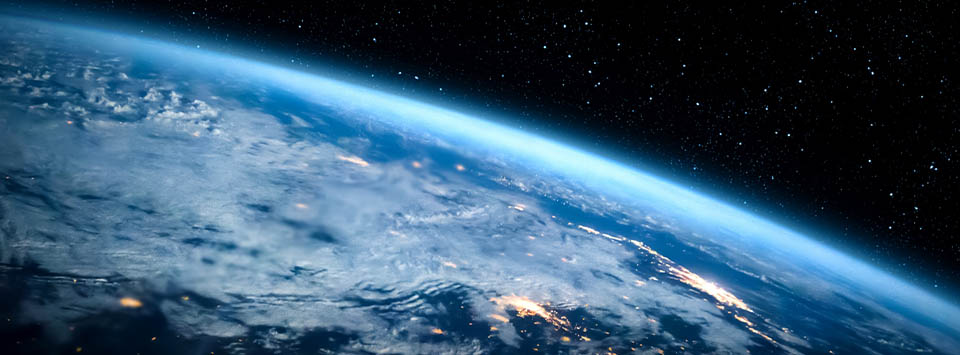
But not every environment is able to produce life, as it takes quite a precise combination of astrophysical and geological conditions. And the probability of getting that combination of conditions is very, very small. Now we know that Earth has them - which is why we’re here, hurrah - but most scientists are doubtful that they exist anywhere else. This makes it pretty hard for there to be life anywhere else.
This idea, called the Rare Earth Hypothesis, is a favourite of those arguing that aliens don’t exist. They’re saying that the odds suggest that Earth - and the life it supports - is one of a kind.
So let’s investigate the hypothesis a little - just what are the conditions of our Earth that have made it possible for us to exist?
Location
We needed to be in a Galaxy with the right types and quantities of the elements it takes to build a planet - iron, magnesium, carbon, oxygen, potassium, etc. We also had to find a spot clear of black holes, supernovae and X-ray/Gamma radiation spewing neutron stars (phew) as that stuff would have destroyed us before we even got started.
Plus we had to be positioned perfectly in amongst all the other planets so that we’d be close enough to get cover from any incoming asteroids but far enough away that their planetary masses don’t interfere with our gravitational field and orbit (so we can keep rotating around the sun.)
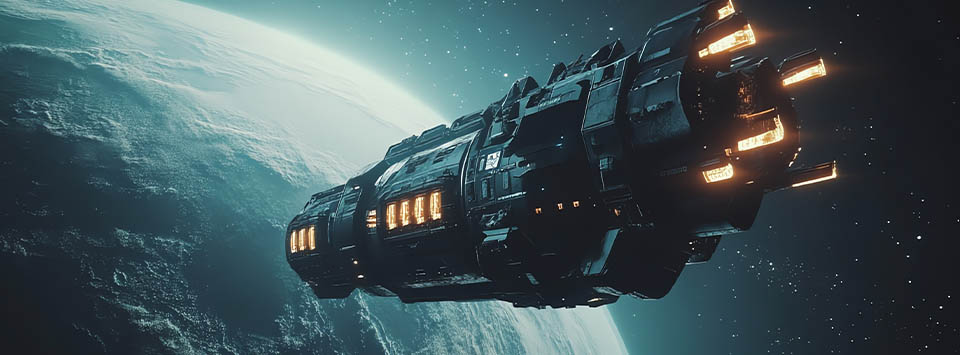
Speaking of the sun, that’s another key thing - light. We needed to get ourselves a star just the right size and just the right distance away that it could provide intensity of light without ionising the Earth’s atmosphere with radiation (which would slowly but surely kill us off). We definitely managed that perfectly - if the sun were even a speck closer we’d probably burn alive and a speck further away would see us freeze. This brilliance of distance is called The Goldilocks Principle because (sort of like the blonde girl’s porridge) it’s not too far or too near - it’s just right. And it’s stayed just right for the whole of the Earth’s lifetime - between 5-10 billion years.
Size is also an issue. Of the eight planets in our solar system, Earth is the only one that’s the right size and structure for nurturing life. It’s able to keep a stable atmosphere on and around the planet and keep the right balance of different temperatures through the crust and core. This, in turn, greases the wheels of the tectonic plates in the upper layers of the Earth, keeping them moving. And although that might not seem like a big deal, scientists believe that the large-scale motion of those plates is essential for recycling carbon matter - making our air breathable and keeping us alive.
Professor Stephen Hawking (University of Cambridge) reminds us that probability only describes what’s likely to happen, not what will happen. And he thinks that if the Universe can form one planetary system like this, there’s no reason to think that there aren’t others.