

Do humans need religion?
For many people across the world, religion plays an important part in their daily lives and identities. While others lead happy lives without believing in a god(s). Why do some of us feel the ‘need to believe’?
Some people argue that we need religion to be moral - to give us a sense of right and wrong, and help us be ‘good’. It sets a standard for good behaviour and punishes the bad. Others would say that it is perfectly possible to be moral and happy without believing in God or gods.
Dr Oliver Scott Curry, a Cognitive and Evolutionary Anthropologist at the University of Oxford, explains that there’s quite a long list of things that make up what we call ‘good’. “Morality is all about cooperation - promoting the common good. Because there are many different types of cooperation, there are many different types of morality, including: sympathy, loyalty, reciprocity, bravery, respect, fairness and property rights.”
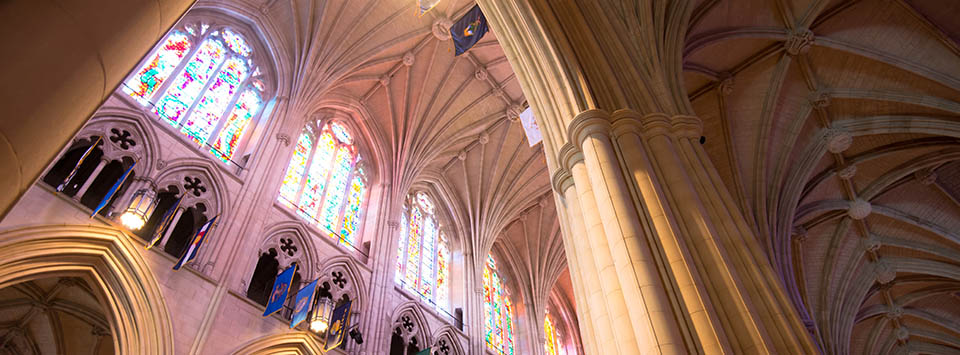
Do we need religion to behave well?
Human behaviour, both good and bad, is a product of nature and nurture.
“Millions of years evolution have equipped us with a range of social, cooperative and altruistic dispositions.,” says Dr Curry. “We’re hard-wired in our brains to be good to each other. We’re not angels but we’re not devils either.”
"How we behave is also influenced by our environments - how we’re brought up, the people around us and what kind of culture we live in. For example, people compete for status in lots of different ways in different cultures. In some societies, people compete to eat the most hallucinogenic herbs, catch the biggest fish, kill the most enemies, write the best poem…in others, people compete by being the most generous, most brave, or most helpful.”
It’s a common assumption that a country which is very religious will also be more law-abiding, moral and respectful than one which is not. But this is not the case.
According to the non-profit organization, Vision of Humanity, which publishes an annual Global Peace Index, the ten safest and most peaceful nations in the world are the least God-believing. While the least safe and peaceful nations are the most religious. This doesn’t mean that a lack of religious belief causes improved wellbeing or religious belief causes social problems. But it might mean social problems – a lack of basic necessities, and institutions like the rule of law – people might turn to religion out of desperation, explains Dr Curry. And once their situation improves, they may no longer put their faith in religion. “For example, once medicine came along and hospitals were built, people were much less likely to believe in magical potions and healing spells.”